

USMNT analysis
USMNT searching for a result against Japan after South Korea defeat

THE UNITED STATES NATIONAL team is now between games in the September window and is looking to build much-needed momentum after a 2-0 loss to South Korea in New Jersey on Saturday.
The USMNT boasted a front line of Tim Weah, Josh Sargent, and Christian Pulisic but was not able create anything very dangerous. South Korea, meanwhile, was able to find pockets behind the U.S. team’s defense on two occasions where they were able to capitalize through goals from Heung-Min Son and Dong-Gyeong Lee.
Overall, it was a performance where the U.S. team did somethings well but is still not close to the level where it needs to be to compete well at a World Cup. Afterward, head coach Mauricio Pochettino tried to remain optimistic and said that the team is still progressing and will be in good shape come the World Cup. He believed that the team competed well in the second half and was able to control the game during long stretches – while conceding just one shot on target the last 45 minutes.
“I am very disappointed about the result,” Pochettino said. “But overall, in the performance, with all that we’ve been talking about in the past, I see it as a massive improvement. I told the players that I think the results will arrive soon for sure.”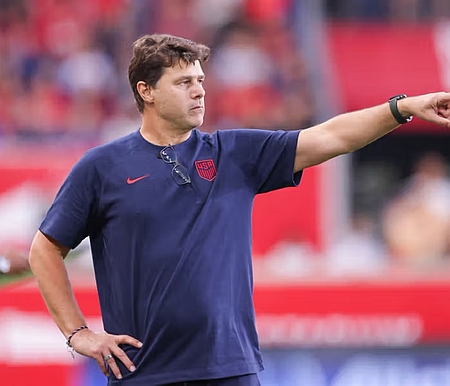
Now looking forward to Tuesday’s game against Japan, certain issues are not in the spotlight following the result.
Here are some thoughts on Saturday’s result and Tuesday’s game.
The battle of moments
When the U.S. is matched up against an opponent where it is on par, it comes down to a battle of moments. When neither teams is overwhelming against the opponent, the result comes down to small moments.
This is where the U.S. team has been coming up short, whether against Mexico, Canada, Panama, or South Korea.
“Every game, every training session, there's always learning opportunities and learning moments,” said center back Tim Ream. "In the first half, we were a little bit too open, a little bit too easy to play against at times. We upped the tempo in the second half, and we made a few adjustments. I think we learned that we can play in different ways. But, at the same time, we have to match the tempo and the intensity of the other team. Definitely something to look at, but definitely some good things to build on as well."
The problem was twofold. The U.S. team was vulnerable – in part because of a lack of chemistry between its central defenders, most notable debutant Triston Blackmon who struggled. But also, because its own offensive players were not able to muster anything of their own.
Pulisic and Weah were not at the level they needed to be in this game.
Midfield
The U.S. team’s midfield play was decent, but nothing special. Diego Luna took awhile to get going, but once he did he was able to help apply pressure. Sebastian Berhaler and Tyler Adams played slowly and weren’t quick enough with their passing. Berhalter, however, remains one of the better set piece takers on the team right now. As great of a player as Pulisic is, he has struggled with his free kick deliveries for a long time with the USMNT.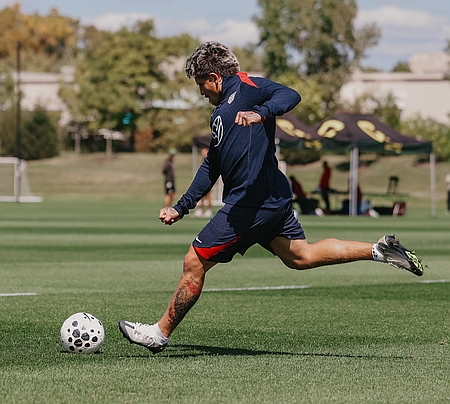
Defensively, Adams was a significant help. Berhalter remains vulnerable defensively but wasn’t at fault for either of South Korea’s best chances.
Subs stood out
Among the better U.S. team’s performers were the wave of substitutes. Folarin Balogun was immediately more dangerous than Sargent after coming into the game in the 60th minute as he was able to use his speed to bother the South Korean defenders. Christian Roldan was a pleasant surprise as he only joined the team late and put in a good 30-minute shift. Chris Richards also helped solidify the backline and afterward, Pochettino said that Richards did not start due to concerns from his club about his workload.
Even later in the game, Alex Zendejas and Jack McGlynn also made positive impacts.
Pochettino remains positive
Despite the tough string of results against good opponents, Pochettino has said that he remains “happy” and “optimistic” as his team moves forward. He said that the objective of this camp was to get more players minutes and to continue to sort through his player pool.
When asked about when this team needs to win, Pochettino replied that needs to be at the World Cup. He also stressed that roster is very volatile at the moment and that he is in the process of evaluating before things settle down.

“You’re [asking] questions like we’re a very consolidated or stable team with a roster that has been playing four years together,” Pochettino said. “I think there are too many things going on in our roster. We are trying to find the best balance for different reasons.”
There is some truth to that. History is filled with teams who were in great form in pre-World Cup friendlies but then struggled at the World Cup. He even cited his own Argentina team in 2002 that didn’t get out of the group stage in 2002. There was also Portugal that year and then the USA in 2006 which was ranked inside the top 10 in the FIFA World Rankings.
But the U.S. team is coming off ugly performances at the Copa America, Nations League, and a so-so performances at the Gold Cup. There needs to be some tangible evidence that the team can play at a high level and winning games. This team has also been coming up short in real games. Is there a chance the team can turn it around? Yes. But the odds of that happening are a long shot.
But another disappointing aspect of this team, which predates Pochettino, is that it is not captivating the public the way it should be leading into the World Cup. The World Cup is not simply a month of soccer, it’s also the long build-up to the tournament that should be generating enthusiasm.
It’s possible the team might captivate the public next summer, but as of now, it is missing the opportunity to be the center of attention in the year leading up to tournament. No one is feeling good about this team, and it is not making many new fans during these special times.Pochettino talks roster again
Mauricio Pochettino again took the time to talk about his current roster with the media on Monday:
"The September window is always difficult because players are always moving and changing clubs. Some are playing, some are not playing, some are coming from a short preseason. September is always the hardest window because players are not settled with clubs."

"Malik Tillman is important and you were talking about him during the Gold Cup. After the Gold Cup, he started the preseason and got injured. He played the last game before the window but it is a risk to call him. And I think he is a player that we will all agree is - good for us? Of Course - to bring him in and maybe have a set back. Instead, he stays with the team for two weeks and is in a position to start again, build his condition with regular playing, and then in October if he is doing well, then you can call him."
"We are professionals and we are looking after them. It's not that we don't want to call him but to call him is a risk. At the same time, you need to call in players with the possibility to give game time. You ask me why? Because what if Tillman is injured? Everyone is saying Tillman is going to be the best player. But if he is injured the day before I have to give the [World Cup] roster, who is going to replace him? That is why now is the moment."
"We need to think about the process and give the possibility for players to perform."
What to look for against Japan
If the U.S. team wants to end camp on a positive note against Japan, here are some areas where the team must improve.
Inside training with Mauricio: Preparing for Japan, building chemistry, and staying locked in on the bigger picture. pic.twitter.com/tHRrYPjEE7
— U.S. Soccer Men's National Team (@USMNT) September 8, 2025
Faster play in the midfield: the midfield was decent against South Korea in terms of possession, but it must be faster with its decision making to expose defenses before they can set up.
Need cleaner touches in the attack: For both Pulisic and Weah, both had tough times against South Korea in getting shots on frame and beating defenders on the dribble. These two must be difference makers for the U.S. team.
Improved chemistry: as a cohesive unit, the USMNT needs to improve every game – regardless of the result. At times, it can still feel like a collection of individuals than a team. This is needed particularly in the final third where the U.S. team has won the possession battles in several recent games but still suffered losses.
Central defense: Central defense is just one of the team’s many problems, but it needs to be better. Richards didn’t start against South Korea but was still able to play. It seems very likely that Richards will start against Japan. If so, a return to the Richards-Ream pairing is most likely although depth is needed. It would be surprising if both Richards and Ream go 90 minutes. If so, a debut for Noahkai Banks is possible.
Tactical change: On Monday, Pochettino hinted that a different tactical formation might be used instead of a 4-3-3. He has said that he is exploring the possibility of a three-man backline to utilize wingbacks for width. Such a formation would likely get Sergino Dest, Max Arfsten, or Alex Freeman further up the field.
