
USMNT analysis
Takeaways: Ellis, Berhalter, and Hall lead youthful USMNT past Peru 4-1

THE UNITED STATES NATIONAL team cruised to a comfortable 4-1 win over Peru on Saturday night in Orlando to kick off a busy new cycle that will include Gold Cups, Nations Leauges, a likely Copa America, its first World Cup qualifiers since 2022, and an Olympic games for the younger side of the player pool.
That last event is key, as it appears as if U.S. Soccer believes in its current emerging generation. The defining story in the win over Peru was the impressive contribution young players made when handed their debut by USMNT head coach Mauricio Pochettino.
In total 11 American players made their debut in the game and each are eligible for the 2028 Olympic team. Unsurprisingly, U.S. Olympic coach Steve Cherundolo was in Orlando to take in this game.
On the other hand, the struggling Peru team started eight players over the age of 30 to make this a game of contrast in several different respects.
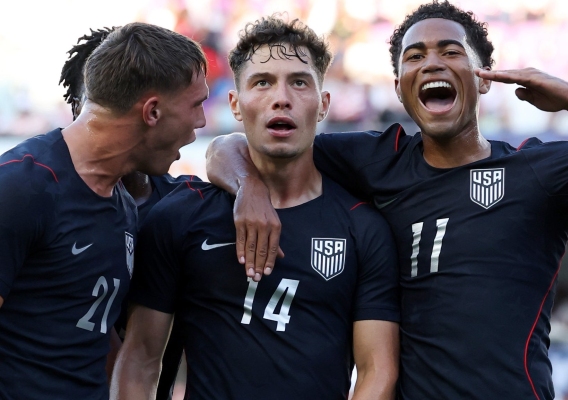
Just four minutes into the game, Orlando City teenager Justin Ellis, 19, headed home a Gio Reyna free kick to give the U.S. team a 1-0 lead. It was a perfect start to the game for Ellis who got to celebrate in front of his home fans and his home stadium to mark his debut.
Couldn’t ask for a better #USMNT debut. Orlando City’s teenage forward Justin Ellis scores in his first cap - in Orlando pic.twitter.com/ohJ1NsamBf
— Brian Sciaretta (@BrianSciaretta) September 26, 2026
In the second half, the U.S. broke a 1-1 deadlock when Borussia Dortmund winger Mathis Albert, 17, drew a penalty which was then converted by Malik Tillman in the 66th minute.
In the 72nd minute, the United States pulled away from Peru when substitute Sebastian Berhalter took a pass on the right wing and then sent in a perfect ball across the goal to set up Julian Hall for a close-range finish. The Red Bull New York teenage forward made a nice run to the far post to send Berhalter’s pass past former Orlando City and current Peru national team goalkeeper Pedro Gallese.
The nail in the coffin came in the 90th minute when Berhalter took a short pass from Hall and rifled a long range shot past Gallese to cap the scoring at 4-1.
Here are my thoughts on the game.
Ellis, Hall, and Albert lead the U.S. youth
This game was the first step for many players who will be important to the program in the coming years.
Justin Ellis, Cavan Sullivan, and Peyton Miller all started for the U.S. team. Then at various times in the second half, Diego Kochen, Mathis Albert, Zavier Gozo, Julian Hall, Frankie Westfield, Brooklyn Raines, Neil Pierre, and Adri Mehetmi came into the game.
These 11 Olympic eligible young players all made their debut in this game and all played well. Some made more significant contributions than others, but each of these players looked as if they belonged.
Ellis came out and made an immediate impact with the first goal. What makes him such a promising player is that, as his play for Orlando has showed all season, he has a variety of ways to be dangerous. He dribbles, he passes, he has a good shot, and he head the ball well. That is how he scored.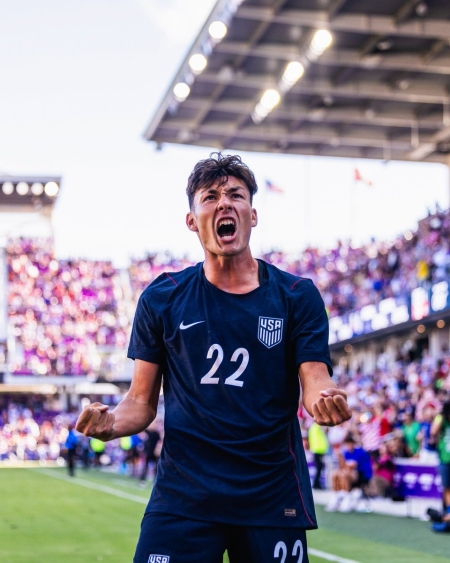
Sullivan was the most anticipated young American to make his debut – two days before his 17th birthday. He did not factor into any of the goals but still showed his quality on the ball. He played on the right side, as he does with Philadelphia, but he also had a lot of freedom to seek out the game.
Albert made effective runs and moved well into space. His quality resulted in drawing the penalty for the game-winning goal from Tillman.
Hall is a little more limited in his scoring options, but the young Red Bull forward is lethal with his movement in the box and getting into dangerous positions close to goal. That is precisely how he scored that first goal and when his team has passers as good as Berhalter, Hall will get his chances.
Great goal. Nice run from Hall to get into position for the finish. Another debut goal…
— Brian Sciaretta (@BrianSciaretta) September 26, 2026
What a play from Berhalter.. controls the pass, sends in a brilliant ball for the assist #USMNT pic.twitter.com/oVHwweLCmN
The only blemish was Peyton Miller’s marking on Gianluca Lapadula equalizing goal for Peru in the 15th minute but Miller still had plenty of positive moments, such as completing 36/37 of his passes and using his speed in several moments to stretch Peru’s defense. But for Miller, the question will be internationally whether he plays left back (as he did in this game) or play as a winger where he does with the Revolution and has done recently with the U.S. youth teams.
Friendlies are typically not memorable games, but there is a chance this game will be remembered as an important start for many key future players.
Keys behind second half surge
The U.S. team was much better in the second half than the first half. There were several reasons for this.
The first is that the movement was just better on both sides of the ball. The substitutes that came into the game in the 62nd minute (Albert, Antonee Robinson, Berhalter, Gozo, and Hall) were much more effective in the press and overall faster with pace.
Reyna, Ellis, Miller, and Musah have offensive abilities but the players who came into the game at that time were much more comfortable against the ball, forcing turnovers, winning second balls, and quickly getting the ball into the attack.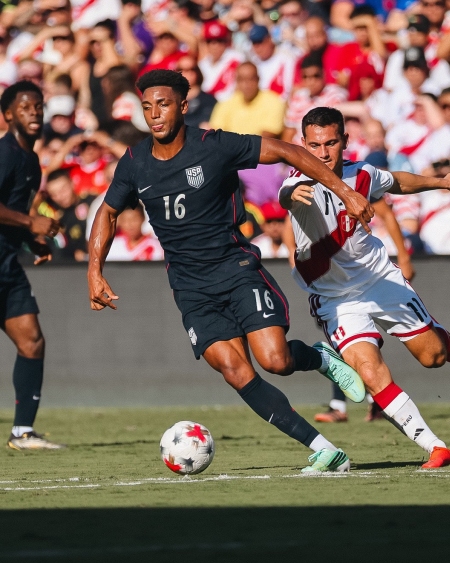
In the first hour, Peru was able to get into a defensive shape easier and stifle the U.S. team’s attack. With the substitutes, they were not able to do that easily.
The second reason for the U.S. team’s surge was that there were much better passers in the game. Antonee Robinson completed 16/17 of his passes and Berhalter was especially effective with getting the ball forward and switching the point of attack.
With better defense, better running, and more pace, the U.S. team had more tools and more weapons to hurt Peru.
Others transition to veteran status
This cycle marks the transition for many players into a more veteran and leader status. Players like Tyler Adams, Chris Richards (who did not play in this game), Auston Trusty, Antonee Robinson, and Sebastian Berhalter will now have the added responsibility of helping to lead and guide this younger generation into the U.S. national team and the world of international soccer.
Seb Berhalter seals a 4-1 win for the #USMNT. Great goal pic.twitter.com/hPLoa2c4M8
— Brian Sciaretta (@BrianSciaretta) September 26, 2026
When Tyler Adams, Weston McKennie, Christian Pulisic, Sergino Dest, and Antonee Robinson began their introduction into the full national team, there were not many veterans on the team. After the failure to qualify for the 2018 World Cup, many of the veterans on the team quickly left the setup. The entire younger generation was young and came into the team without much guidance.
It has been a very long time since the U.S. team had a normal age range with young players, prime age players, and older veterans all on a team together.
A return to a balanced age will likely happen this cycle. Some players will age well and find roles with the team after the age of 30. Some will fade out. But in this game, the recent World Cup veterans of Robinson, Berhalter, and Adams played very well and brought some maturity into the game.
Ice cold from Malik Tillman. ????#USMNT x @VW pic.twitter.com/YIpfX4RIET
— U.S. Soccer Men's National Team (@USMNT) September 26, 2026
That will be needed as Pochettino continues to call in young players.
Olympic decisions await
As mentioned, U.S. Olympic head coach Steve Cherundolo was at this game and Pochettino said this week that he will be collaborating with Cherundolo to determine where players below between the Olympic and senior national teams.
“Steve is now participating in our training sessions,” Pochettino said this week in his Futbol de Primera interview with host Andres Cantor. “We invited him to be with us so he can see the players up close, and he’s also becoming familiar with everything here at the training center. So it’s collaborative work. We analyze things together, look at the positives and the things that need improving, and make decisions together.”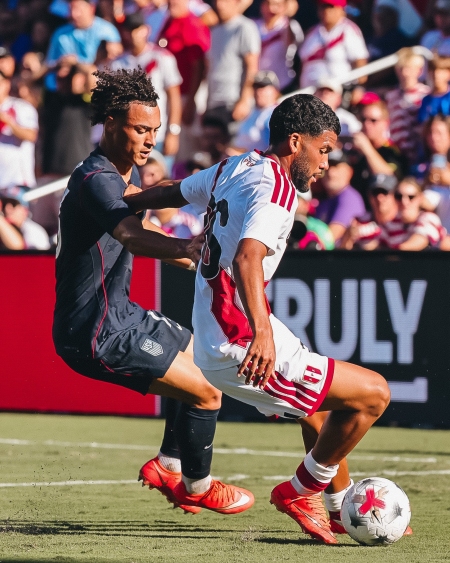
“I think what is best for U.S. Soccer is for decisions to be made collectively,” he added. “The decision to bring these young players in belongs to all of us. It isn’t Mauricio’s decision or Steve’s decision or one particular person’s decision. It’s a decision made by the entire structure.”
U.S. Soccer COO Dan Helfrich has said that the federation will strong emphasis on the Olympic team and there is a priority towards succeeding at the Los Angeles Games in 2028. That also will be a time when the U.S. national team might be participating in the Copa America.
The Olympics is an excellent springboard for players to prepare for the World Cup. The 2026 World Cup teams for Spain, France, and Morocco all drew heavily from their respective 2024 Olympic teams to build their rosters.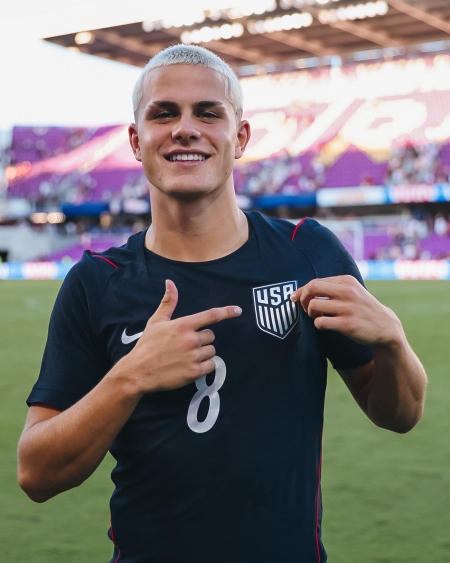
So where will the best U-23 players play that summer? This likely includes several of the 11 players who made their debut in this game.
Players will likely fluctuate between the two teams as both coaches get a chance to work with the players. But it should not be a surprise to anyone if U.S. Soccer goes for the gold medal in 2028 with the best possible U-23 Olympic team. While players like Sullivan, Miller, Eliis, and Albert could play for the U.S. national team in 2028 in some capacity, the Olympic team would give them more of a chance to play more minutes, start, and have leadership roles. That might be best for their development for 2030.