

USMNT analysis
Pochettino leaves the USMNT with a legacy that has good & bad. Also, what's next?

WHAT HAS BEEN WIDELY REPORTED is now official. Mauricio Pochettino will coach these two Nations League games against Haiti in the quarterfinal of the CONCACAF Nations League and will then leave U.S. Soccer to become the coach of Manchester United.
Pochettino’s legacy with the U.S. national team will be talked about for years. He is the most high-profile manager the team ever had and the federation took and ambitious risk in hiring him. He was new to the international game and he was expensive, with U.S. Soccer needing external funding sources to make it happen.
Unless the U.S. team crashes out to Haiti, Pochettino’s legacy is largely complete. Here are some thoughts on it all.
The Pessimistic View
Ultimately Pochettino came up short of winning the game he was hired to win. The U.S. team did not advance to the quarterfinal of the 2026 World Cup. Perhaps that would be easier for fans to take if the U.S. team loss a close but hard-fought game to Belgium. But instead, it was a one-sided blowout at home in front of a record television audience.
The United States national team left the 1994 World Cup at home after a 1-0 loss home to eventual champion Brazil in its first run to the knockout rounds in the modern era of the tournament. A new wave of enthusiasm for the sport and the national team was created and it kickstarted a new era for U.S. Soccer.
The manner of that loss to Belgium might have limited the impact the World Cup could have had in this country.
There is also the image that U.S. Soccer was willing to bring in a coach whose heart was always with the European club game. Pochettino lived in London throughout his tenure. This came a time when the federation and employees were relocating to Atlanta. He was continuously linked with every big European job that popped up and he wanted to return to the Premier League.
The Optimistic Take
The problems that Pochettino inherited when he took the U.S. were more serious that expected. The team had just crashed out of the Copa America at home in the group stages. The core that previous USMNT manager Gregg Berhalter built and hoped would carry through the 2026 cycle stagnated. There was a sense of complacency among the players.
Pochettino correctly believed that too many players were not under pressure to defend their spots on the team. Many players who were on the 2022 World Cup team took call-ups for granted.
The solution was for Pochettino to light a fire under players and start not calling up players who were just assumed to be in the picture. But taking this approach also required having players in place to fill the void of the players who were now cut.
Always a special place in our hearts. https://t.co/T1R9PgdYtl
— U.S. Soccer Men's National Team (@USMNT) November 13, 2026
This was perhaps the greatest strength of Pochettino in his two years with the U.S. program. His player identification was very impressive. Alex Freeman had only been starting for Orlando City for four months when he was given a spot on the U.S. team. One year later, he started and scored in the World Cup. Very few would have predicted that Sebastian Berhalter would have carved out a role on the national team, but Pochettino had faith in Berhalter (the son of the coach he replaced).
Player identification was a great strength for Pochettino. He did not fall victim to picking players by club status but rather went by his own personal evaluations. In his last two windows, he ushered in a wave of young players that are showing promise and will be very important to the federation in the next four years.
Why extend him?
Following the World Cup, U.S. Soccer came to an agreement with Pochettino for a new contract. Now less than four months later, he is gone. At the time he was extended, most of us in the media did not believe he was going to last four years.
So why?
The answer is probably that it allowed U.S. Soccer to move forward without yet another interim manager. Over the past decade, Dave Sarachan, Anthony Hudson, BJ Callaghan, and Mikey Varas have all had the job in some sort of interim capacity.
A heartfelt thank you from Mauricio Pochettino. https://t.co/a7IF7hIDHr
— U.S. Soccer Men's National Team (@USMNT) November 13, 2026
Pochettino on a new deal (even if it was never likely to last very long) spared the team from another lengthy spell with an interim manager for games on international windows. Plus, it gave the federation a chance to make some money with a $10 million buyout that would never have happened with an interim.
Yes, Steve Cherundolo will now run the December camp but that roster was always going to have a heavily Olympic team feel to it so it makes sense he is running it.
All this will only have made sense if U.S. Soccer was also working behind the scenes planning for a Pochettino departure in advance. If U.S. Soccer was caught flat-footed or was blindsided by Pochettino’s departure, it will all have been pointless.
But if U.S. Soccer has been doing its homework and now acts quickly to hire a manager they want, then it all came together nicely. Pochettino was essentially the interim manager the entire time since the World Cup and these last two windows bought the federation more time to find the right manager after the World Cup.
What’s next? Who could be next?
The expectation should be that the federation will move quickly and have a coach early in 2027, well before the March international window.
Who will be the candidates? Everyone has a guess, so here are mine.
Pep Guardiola: is the biggest name possible and he might be willing to listen if the start date is in 2027. He needed time off after Manchester City and perhaps a start date in 2027 will be enough time. Plus, the international side of the game might be appealing as it very different from the daily and weekly grind for the club side. On the other side, Guardiola is used to only managing world-class players. Does that make him the right pick for the USMNT?
Roberto Martinez: Over the past 15 years has managed Belgium and lately Portugal. The Belgian team he took to third place in 2018. With Portugal he won the UEFA Nations League and guided them at the 2026 World Cup where they only lost to eventual champions Spain by a 1-0 score. Portugal was not always great at the World Cup as they were outplayed by Colombia in a 0-0 draw and were lucky to get by Croatia in a 2-1 win. But it was a tough assignment handling an aging Cristiano Ronaldo.
Gareth Southgate: the former English manager has been out of work since the 2024 European Championship but he did a great job with the English team (which is always a difficult assignment). He also has successful experience with England’s U-21 team and in working with young players. He is a potential candidate that shouldn’t be surprising.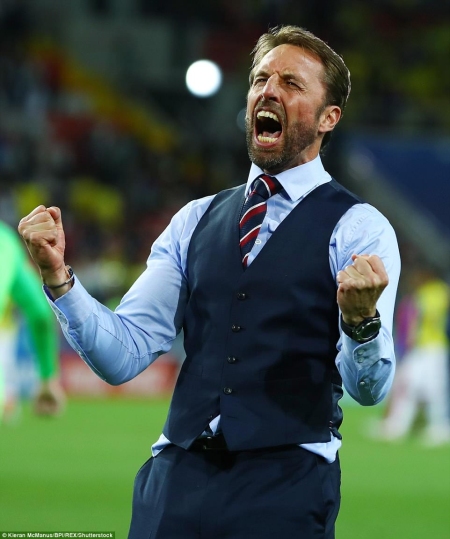
Julian Nagelsmann: the former manger of Bayern Munich, RB Leipzig, and Hoffenheim is coming off a disastrous World Cup with Germany where the team lost on penalties to Paraguay. But as a club manager, he had a terrific reputation with Hoffenheim, RB Leipzig, and Bayern Munich.
BJ Callaghan: is one of the top domestic based coaches right now. He is likely the MLS Coach of the Year for the work he did with Nashville. With the club he has won the 2025 U.S. Open Cup and the 2026 Supporters Shield. With the U.S. national team, he won the CONCACAF Nations League in 2023 during his interim stint.
There are a few names that might get mentioned which I would be skeptical of. First, Pellegrino Matarazzo is thriving at Real Sociedad and is the most accomplished American manager ever in Europe. It doesn’t make much sense for him to walk away from the club game now. Thierry Henry has been around American soccer for a long time and most recently coached the French Olympic team in 2024 to a silver medal. His experience as a manager seems to be too thin and results have been mixed. Jesse Marsch has also been linked with the job during previous openings but seems happy with Canada at the moment.