
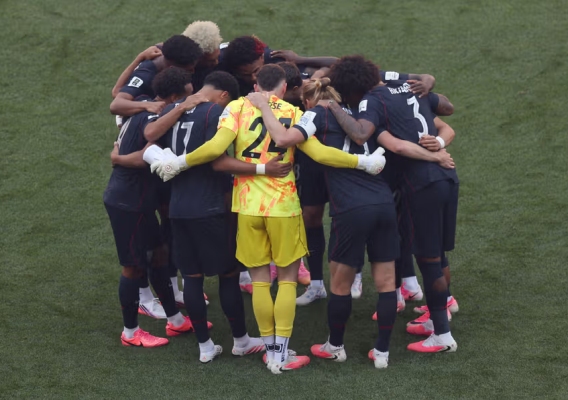
USMNT analysis
Post Mortem: USMNT's ugly 4-1 loss to Belgium ends World Cup mixed with good & bad

THE UNITED STATES NATIONAL team is now out of the 2026 FIFA World Cup following an ugly 4-1 loss to Belgium in the Round of 16. Mauricio’s Pochettino’s team was never in the game as Belgium came out with a blistering start, scored the opening goal, was never rattled from Malik Tillman’s equalizer, and then just kept up a high level until the final whistle. It was a bitter pill for the U.S. team who were unable to reach the quarterfinal to match its best World Cup of the modern era.
As expected, Pochettino kept with the same starting lineup he used in the 4-1 win over Paraguay and the 2-0 win over Bosnia and Herzegovina. But the big story was that Folarin Balogun was able to play after his red card was suspended by FIFA. From there the story unraveled with talk about political pressure influencing the decision.
But that only seemed to galvanize Belgium who played its best soccer of the entire tournament in the first 10 minutes of the game and did not let up.
Here are some thoughts about it all.
Very poor start
The U.S. team almost immediately after kickoff. Belgium was immediately dangerous and capitalized in the ninth minute on a goal from Charles De Ketelaere on a play that was built out of the left side and the U.S. team was not able to effectively clear.
After Tillman’s equalizer, De Ketelaere scored just minutes later to halt any momentum the U.S. team was gaining. Again, the play originated out of Belgium’s left side – exposing the U.S. team’s poor defense on the right side.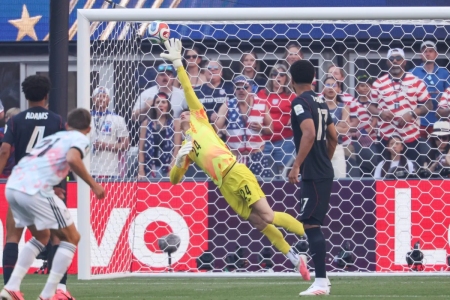
"We started in a poor way," said Pochettino. "We never found the flow of the game... Even after we scored in the next action we conceded a goal. It was a very bad day. We didn't show the quality from previous games."
The U.S. team was never able to get into the game and make the plays it wanted. Instead, it found itself reacting to Belgium and chasing the game.
Plenty of Blame to go around
Of course, the U.S. team made a lot of mistakes in this game. Matt Freese was entirely responsible for the third goal, but the game was lost well before that.
A lot of questions will instead circle on the lack of offensive production from Christian Pulisic (0 goals, 1 assist), Sergino Dest (0 goals, 0 assists), and Weston McKennie (0 goals, 0 assists). The team’s best offensive players never got going. Up to the Belgium game, the team was managing but these players needed more positive momentum heading into the round of 16.
Without these players producing, it then put a lot of stress on other players such as Tillman and Balogun. Then when they were able to be contained, the U.S. team did not have enough other focal points of attack.
What will be the legacy?
The team won its group and won a knockout game. It was alive in the tournament for 24 days. When combined with the two friendlies, it was a month and a half of mostly positive experiences where the American public rallied behind the team. People really got to know the team’s players and people were excited to watch them play.
Does that come all done with a loss? Some fans who only tuned into this tournament will not stick around. Plenty newcomers will likely continue to follow the team and the sport, at least for a while. A few fans have instantly become diehard fans. It is very hard to see a diehard fan prior to this tournament simply stop following the team altogether.
What many people realize is that while the round of 16 loss was ugly, this team was in a terrible place as recently as 18 months ago. The team was grouped at the 2024 Copa America on home soil. Then after a coaching change to bring in Pochettino, the 2025 Nations League final rounds was even worse as the team lost to Panama and Canada to finish fourth.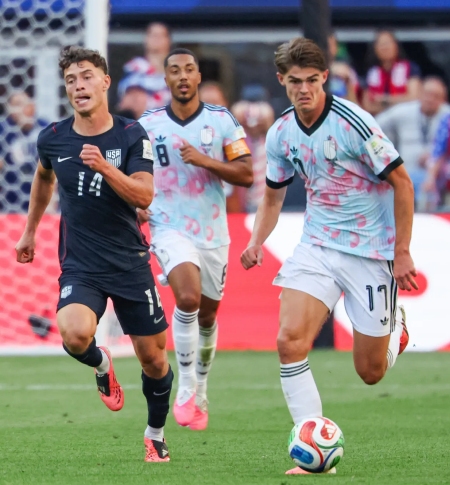
Pochettino and his staff essentially had a year to go from rock bottom and into the final World Cup camp. Then in March 2025, it appeared as if not enough progress (if any) was being made.
When the biggest concern for most of the past two years being whether the U.S. team could escape from its group, the current results were positive and the past six weeks were a lot of fun.
But then there is disappointment in that this team did not push enough boundaries. It won the games it should have, and that is certainly no small accomplishment (if you disagree, ask Germany or even Italy). Pochettino also saw his team win a knockout game, in the brand-new round of 32. But it didn’t surprise anyone with anything groundbreaking. The 2010 also won its group, the 2002 team advanced to the quarterfinal.
People will see this in two different ways – and they’re both right.
On one hand, Pochettino was effective in salvaging a sinking ship. No one can say that the 2026 World Cup was a disaster for the United States national team. That is reserved for teams like South Korea, Uruguay, Germany, and possibly Ecuador. The U.S. team was leaps and bounds better than it was at the Copa America two years ago.
On the other hand, following the 2022 World Cup, there was legitimate hope that the team, with the same core but now only in their prime years, would be able to compete better in a knockout against a good team. In that regard, the team played better in its 3-1 round of 16 loss to the Netherlands in 2022 than it did against Belgium.
It is typically always true that the World Cup is mixed with good and bad for all but the winner. Accepting both the positives and negatives is healthy when looking at this U.S. team. There is no need to “blow everything up” but there is a need for the next cycle to be more positive throughout the four years as opposed to simply scrambling to put it all together at the end.
Perilous Next Cycle
The next cycle building towards the 2026 World Cup is going to be extremely difficult. Over the course of the next four years, Christian Pulisic, Weston McKennie, Tyler Adams, Tim Weah, Antonee Robinson, and Chris Richards will move past their prime years and into their 30’s.
The U.S. team had a young team in 2022 and the expectation is that most of that core would stick together to lead the squad into 2026. That is what happened. But there needs to be a lot more changes to the player pool throughout the upcoming cycle. 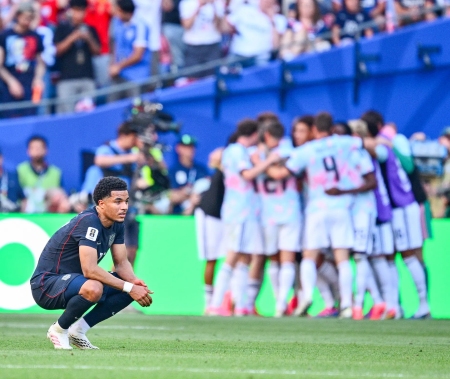
Without a surge of new talent, the 2030 team will not be nearly as talented as the 2026 team.
The upcoming youth national team cycles at the U-20 and U-23 levels are going to be important to producing players ready to help the full national team ahead of 2030. The Olympic tournament in 2028 will be important to give big tournament level experience to the next generation.
It will also be very important have players such as Adams, Pulisic, and McKennie transition into more mature, leadership roles within the full national team.
The 2030 team can still be very successful, but this coming cycle is going to require a lot more change, youth integration, and perhaps willingness to cut established veterans who fade a bit too far.
It is a huge job ahead.
